G Governexis
SMART-NIST

A cybersecurity governance and risk decision-support platform in development.

SMART-NIST is designed to help organizations prioritize cybersecurity controls under real-world constraints such as budget, maturity, dependencies, and implementation readiness.

The Challenge

The problem SMART-NIST addresses.

  • Too many controls to prioritize manually.
  • Limited cybersecurity budgets and staffing.
  • Difficulty explaining why certain controls should come first.
  • Need for better governance, risk, and compliance alignment.
  • Need for planning that considers maturity, dependencies, and implementation readiness.
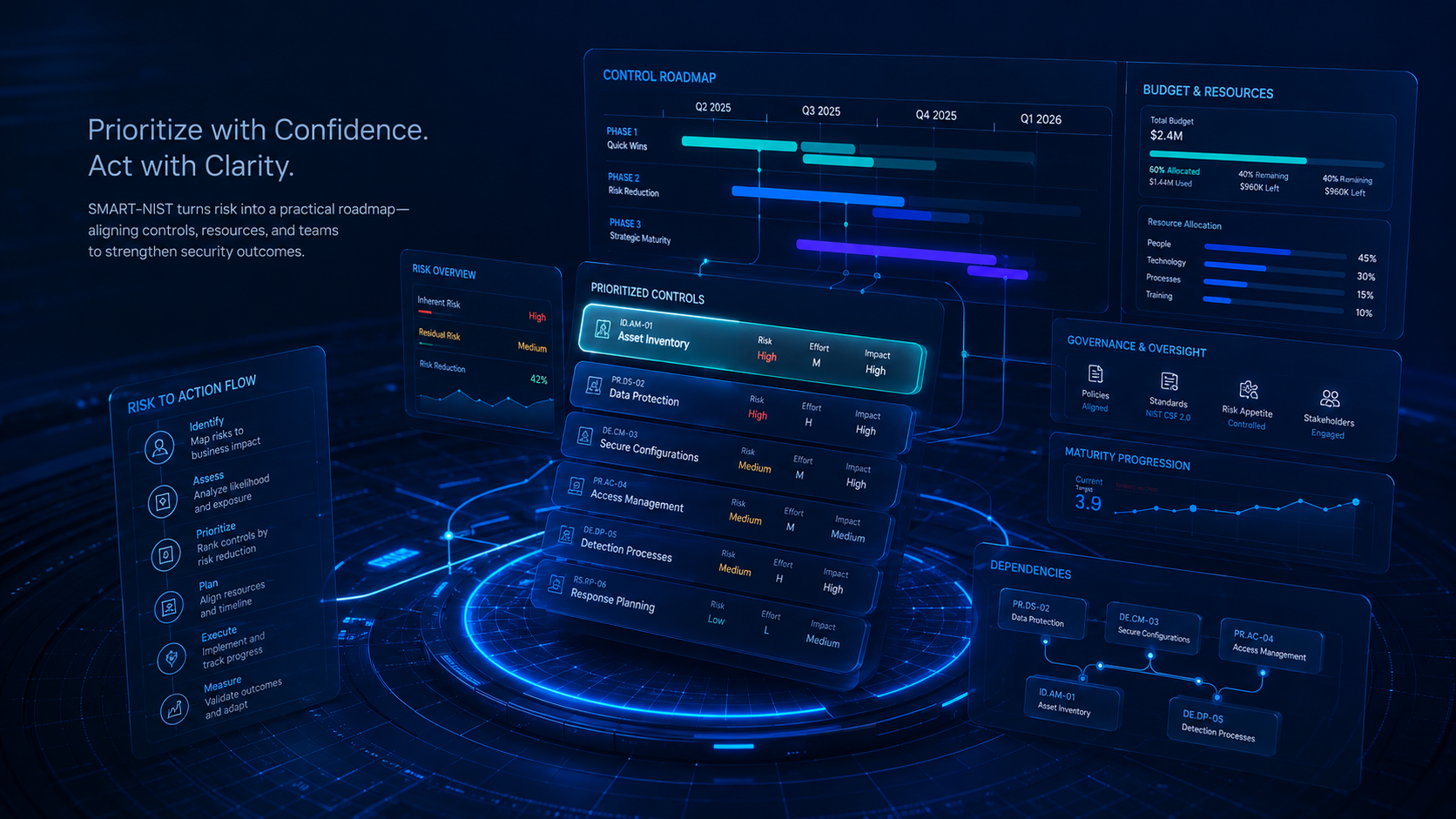
SMART-NIST decision-support dashboard illustration
Core Value Areas

Designed for practical, explainable planning.

SMART-NIST is being shaped to help turn broad cybersecurity expectations into clearer control-prioritization conversations, roadmap phases, and governance decisions.

1

Control Prioritization

Helps organize cybersecurity controls into a more practical implementation sequence.

2

Risk-Informed Planning

Supports decisions based on risk-reduction value, organizational context, and practical constraints.

3

Budget-Aware Roadmaps

Helps organizations think through cybersecurity investments within realistic financial limits.

4

Explainable Governance

Helps leaders understand why certain control actions may deserve priority.

Cybersecurity roadmap and prioritized controls illustration
Planning Philosophy

Decision support without overclaiming.

SMART-NIST is currently positioned as an in-development platform. The public website should describe the problem, the intended value, and the responsible development direction without claiming the platform is commercially proven, certified, or a substitute for professional judgment.

Governexis is developing SMART-NIST as an original cybersecurity decision-support platform supported by ongoing research, development, and intellectual property work.

Responsible disclaimer: SMART-NIST is currently in development. It is intended to support cybersecurity planning and decision-making. It does not provide legal advice, guarantee compliance, certify an organization, or replace qualified cybersecurity, compliance, audit, or legal professionals.